Dec 6
Five Christmas Gifts to Bring Back Your Spark in 2024!
As the festive season approaches, what better way to express love and care than by giving gifts that contribute to the well-being and vitality of your loved ones?
This year, consider presents that not only celebrate the joy of the holiday season but also set the stage for a revitalized start to the New Year. Here are five Christmas gifts designed to bring back the spark in 2024!
Also, remember there is no shame in asking for presents for yourself, that you truly want and need, so why not send this list on, or drop some subtle hints to Santa! 😉
1. The Glucose Goddess Method: A 4-Week Guide to Energy, Craving Reduction, and Feeling Amazing
In a world filled with hectic schedules and constant demands, energy levels can easily plummet. Gift yourself or your loved ones ‘The Glucose Goddess Method’, a comprehensive 4-week guide that promises to rejuvenate and revitalize.
This program focuses on cutting cravings, boosting energy, and promoting an overall sense of well-being. It’s the perfect gift for those seeking a transformative start to the New Year.
2. Centred Mums Pilates Retreat Day
A day of self-care and rejuvenation can make a world of difference. My Centred Mums Pilates Retreat Day offers the perfect escape. This retreat combines the benefits of Pilates with a focus on centring the mind and body. A thoughtful and invigorating experience, it’s a gift that promotes both physical and mental well-being.
3. Treat Yourself to a Massage from Fernwood Remedies
Indulge in the gift of relaxation and tranquillity with a massage from Fernwood Remedies. Their professional and rejuvenating massage services provide a holistic approach to well-being. This gift is an excellent way to unwind and relieve the stresses of the holiday season, setting the stage for a calm and collected entry into the New Year.
4. The Gift of Sleep from Clare McDonald @creative.sleep
Ease into the New Year with Sleepy Sundays, A 3 part playful, calming and nurturing experience for parent and child. Using breath work, imagination and fun activities. This intuitive approach to tackling worries and wired minds is back again in January. Enjoy the whole course for £49!
For adult adults seeking better sleep, there’s also the ‘Help For Sleep’ online course, for £39!
Clare herself suffered from insomnia from childhood into her late 30s but eventually found a combination of the Coherent Breathing technique, guided imagination, a lot of reframing around her beliefs about sleep and an overall intuitive approach worked wonders.
5. The Pelvic Floor Project: Ongoing Wellbeing
Invest in long-term well-being with my Centred Mums Pelvic Floor Project. This initiative offers continuous support for pelvic health, promoting overall vitality.
By gifting a membership to The Pelvic Floor Project, to either a loved one or yourself, you provide a resource that focuses on an often-overlooked aspect of well-being, contributing to a healthier and more energised lifestyle.
Making this commitment to your wellbeing will set up your pelvic floor health for the rest of your life. Get rid of those pelvic floor issues like wetting yourself that you’ve been putting off for too long!
Conclusion:
This holiday season, go beyond traditional gifts and give the present of well-being.
Each of these gifts is carefully curated to not only celebrate the joy of Christmas but also to lay the foundation for a revitalized and spirited start to the New Year.
Whether it’s promoting energy, relaxation, better sleep, or ongoing well-being, these gifts show that your love and care extend to the overall health and happiness of your friends and family.
Wishing you a very Merry Christmas and a Sparkly New Year!
Grace – Founder, Centred Mums
Nov 21
How do mums find time to exercise??
Something I am asked all the time – how do mums find time to exercise?
I have a really strong memory of going to a wellbeing event when my kids were about 5 and 2. The leader was talking about the importance of self-care/creating time for you etc and she told me that she got up every day before her kids to make sure she had time to exercise. My youngest was still breastfeeding through the night and I was averaging about 3 wake ups between going to bed at 10ish and being up for the school run around 7am. When I asked how old her kids were and she told me 15 and 17. I nearly spat my drink out in her face in amazement that she was genuinely giving me advice about getting up before the kids when mine were so little!
I hear you
Listen, I get it. I spent the first 7 or 8 years of motherhood neglecting my own needs. My kids have only really started sleeping in the last year or so (they are 7 and 10) and it was all I could do to get through the day without worrying about exercise too. But I missed it. I’ve always been an active person, I KNOW all the benefits, I see all the benefits in my clients! But I really struggled to apply the same things for myself.
However, I look back and I think I could have approached things differently. Here is some of the advice I give to people who feel like they don’t have the time or energy for exercise as I wish I had been able to apply this to myself in those early years:
Action steps
-
Take imperfect action.
Don’t wait for ‘the right time’. It will never come! You don’t need 30 minutes of alone time, a lit candle, to put on gym clothese and get out a yoga mat that would look great on Instagram. 3 minutes of movement (eg 10 x bridges and 10 x cats) while the kids are climbing on you is enough! Just show up!
2. …know that everyone falls off the wagon sometimes…
and you can always get back on. If you miss a day, a week or a month it doesn’t matter. Don’t give yourself a hard time about it, just pick a habit you already have and add a tiny one to it. And start today.
3. Aim for progress not perfection
– you DO NOT NEED 30 minutes of exercise per day to change your pelvic floor health. You will even get results if you forget to do anything at all some days (although hopefully that won’t happen now with your tiny habits). There is no need to change your whole lifestyle, just pick one small change and start today. Meet yourself where you are. If you are currently doing no exercise then doing 2 squats every time you go to the toilet will really start to add up.
4. Find an accountability buddy
– whether it’s your partner, your kids, your best friend or your mum, tell someone about the fact you want to commit to this. Tell them what your plan is and what steps you are going to take to create change.
5. Increase the amount you move day to day
– park your car further away from work, leave extra time so you can walk the school run instead of driving, go for an evening stroll once the kids are in bed. Whatever it is that you can do to fit in more movement, do it!
What next
This Feel Better Live More podcast is all about making habits stick and is full of super helpful tips to help you work out how do mum find times to exercise.
I know you feel like you don’t have time but most of us can find a few minutes throughout our day where we are doing things that we would rather replace with more positive behaviours eg scrolling on instagram or watching tv.
We can set ourselves up for reducing these to create more time for the habits we WANT with simple changes in our lives. I have recently made a rule for myself that my phone isn’t allowed upstairs and my phone use has gone down by over an hour a day as a result! Or you could say that before you sit down to watch tv in the evening/before you get into bed you will always do 2 squats to add to the 2 squats you do after you brush your teeth (as an example).
If you would like to join a class or have access to on demand content from Centred Mums, have a look at some of the options here.
Dec 13
5 Christmas Gifts To Help Strengthen Your Pelvic Floor
If you’ve been struggling with your pelvic floor this year, it’s time to get it sorted! And what better gift could you ask for for Christmas than leak-free dancing round the tree, cooking on your feet all day with confidence or jumping with actual joy with the kids at the panto?
While you could treat yourself, there’s zero shame in asking for presents that you truly want and need, so why not send this list to your chief gift giver (or print out and post to Santa!)?
Here’s my Christmas gift guide to help you build pelvic floor strength ready for a much more enjoyable 2023!
The gift of pelvic alignment
It might sound strange to start with feet when Centred Mums is all about pilates for pelvic floor, but everything in our bodies is connected!
You’ve got 26 bones, 33 joints, over 100 muscles, tendons and ligaments in your feet and the way you walk and move using them has an impact on your other joints, but yes, I’m interested in your pelvis!
Barefoot shoes are designed to make your movement more natural and they will help improve the alignment of your pelvis over your ankles.

And over the last few years, Vivo Barefoot have broadened their range of footwear so you don’t always have to look like you’re heading out to a training session. They’ve got all the sporty ones but also everything from riding boots to a classic Chelsea!
End 2022 with comfortable feet and feeling more aligned!
Connect with your pelvic floor
As a women’s health professional (WHP) one of the first things I want my pelvic floor clients to learn is connecting with their pelvic floor.
Using a lightweight, soft ball like the Gymnic Soft Over Ball you can squeeze your ankles or your inner thighs together and connect with your pelvic floor. It’s designed to enhance your Pilates workouts by developing strength and endurance but is low impact.

I like this ball because it’s got a dimpled texture that makes it easier to grip than some other ones, so no slipping. Its soft squishiness gently challenges your body to work on stability, and balance. The perfect gift!
Get support with a specialist
If you’ve been putting off getting help with your pelvic floor, maybe it’s time to get a check with specialist physiotherapist? They specialise in helping you regain confidence in your pelvic floor – and they are able to help treat your unique situation. You can search a directory of pelvic health physios here.

The Squeezy app is a brilliant app for support where you set your reminders so you can *actually remember* to do your exercises throughout the day. It comes pre-set with an exercise plan recommended by a pelvic health physiotherapist (following NICE guidelines), or if you’re working with a physio 1:1 then you could input their personalised plan.
Squeezy has really helped some of my pelvic floor community build strengthening their pelvic floor into their daily routines.
Little Christmas miracle (balls)
These awesome release balls are for you to sit on and use to create better pelvic floor function.
Gift yourself a way of relieving pelvic pain, reducing tension that might be impacting your pelvic health, and finally aligning your body. You can create a mind-body connection through purposeful breathing and using the miracle balls in strategic positions on or under your body.
It all works with the balls providing a resting and feeling “spot” for your body, alongside your breathwork and gravity, building a neurological communication with your brain, you start to feel your tight muscles loosen.
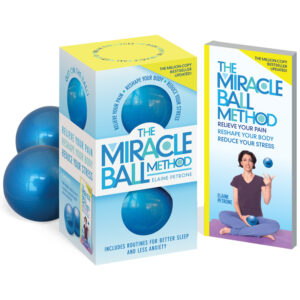
The balls come with a book explaining the method and how to use them, plus there’s classes to buy on the Miracle Ball Method website if you want to dive in deeper.
The key to these Miracle Balls is that you will start to hear and actively listen to what your body is trying to tell you. Which is a Christmas gift we all deserve, right?!
The gift of pelvic floor confidence
And of course I’ve got the best gift of them all for you, the one that will support you to build and strengthen your pelvic floor – my Pelvic Floor Confidence Programme. Let’s build your understanding of your core function and develop strength in your body to allow you to address those pesky leaks, improve prolapse symptoms, close abdominal separation and prevent back pain.

Over our 4 months together we’ll improve your pelvic floor function by both releasing and strengthening to address the symptoms you’re facing. By using a holistic approach – including Pilates, breathwork, posture… – to build strength through your entire body so you’ll see amazing unexpected results, but particularly a stronger and more functional pelvic floor.
It’s time to stop worrying about leaking and start enjoying your life again! Give yourself the best Christmas present ever: Pelvic Floor Confidence!
It is possible for you to have confidence in your pelvic floor again, and the gems in this Christmas gift guide will help you on that journey!
Wishing you a very Merry Christmas and a confident New Year!
Grace – Founder, Centred Mums


